
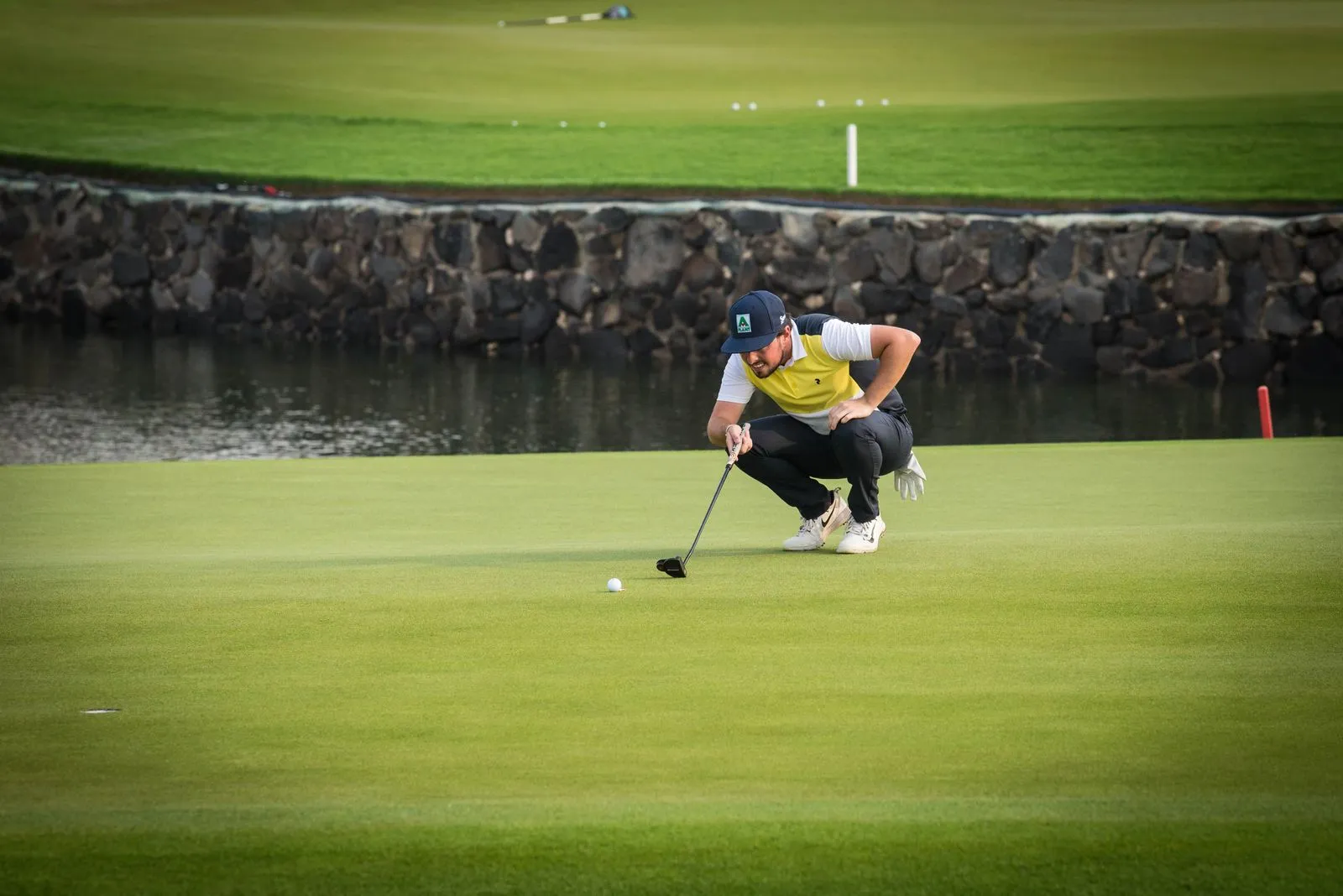
A putt that finishes close to the hole gives you a manageable next shot, even when the first one does not drop. Distance control comes from matching stroke length and tempo to the putt’s length, slope, and green speed. You can train that feel with focused practice instead of hitting putts at random. Use the routine and drills below to build a reliable pace judgment and reduce the number of putts you leave far short or long.
Read the Putt Before You Stroke
Start by estimating the distance to the hole, then check the slope between your ball and the target. Uphill putts usually need more pace; downhill putts need less. Also notice whether the surface appears faster or slower than the greens you normally play. These observations give you a starting plan, but let the roll of your practice putts confirm your impression.
Choose a landing area or stopping zone, not just the cup. On a level putt, picture the ball finishing a short distance beyond the hole if it misses. On a downhill putt, aim to have it stop at or near the cup. A specific finish point makes it easier to judge whether your stroke delivered the pace you intended.
Build a Repeatable Practice Routine
Begin each session with a few putts from one short distance to settle your setup and tempo. Then move to a medium distance and a longer one, rolling several balls from each spot. Keep your feet, ball position, and grip consistent. Change only the stroke length needed to produce the pace for each putt, rather than adding a sudden hit with your hands.
After warming up, practice from varied distances without repeating the same putt over and over. Pick a new starting point for each ball and name your intended finish zone before stroking it. This asks you to read, plan, and execute as you would on the course. Track whether each ball finishes short, long, or in the target zone, and adjust your next attempt based on that result.
Use Pace-Focused Drills
For a ladder drill, place balls at several increasing distances from the hole. Roll one from each spot, aiming to finish every ball within a chosen area around the cup. If a ball stops outside that area, repeat the distance before moving on. The changing lengths prevent you from relying on one memorized stroke and help you connect distance estimates with the amount of stroke needed.
For a boundary drill, set two tees or use visible marks to define a stopping zone beyond the hole. Putt from different distances and try to stop the ball between the cup and the far boundary. Adjust the zone for uphill, downhill, and level putts. The goal is not to force every ball past the hole; it is to learn how slope changes the pace that produces a controlled finish.
Review Results and Adjust
After each putt, look at where the ball finished before taking another. A repeated short miss may mean your stroke is too small for the distance or the slope. A repeated long miss may point to excess pace. Make one clear adjustment at a time, such as lengthening the backswing slightly, then check whether the next ball finishes closer to your target zone.
Finish practice with a few putts that vary in both distance and slope. Use your normal pre-putt routine, select a finish point, and commit to the pace you chose. San Antonio Putting can help golfers in San Antonio, TX, develop a practice plan around distance control and on-course needs. Keep a note of the drills and adjustments that helped, then revisit them during your next session.
Better distance control starts with a clear finish target and improves through deliberate feedback. Practice from changing distances, account for slope, and judge each result before making an adjustment. A steady routine helps carry that feel from the practice green to the course. If you want guidance tailored to your putting, consider booking a lesson with a local instructor.